1. The PM E-DRIVE Scheme (National Update)
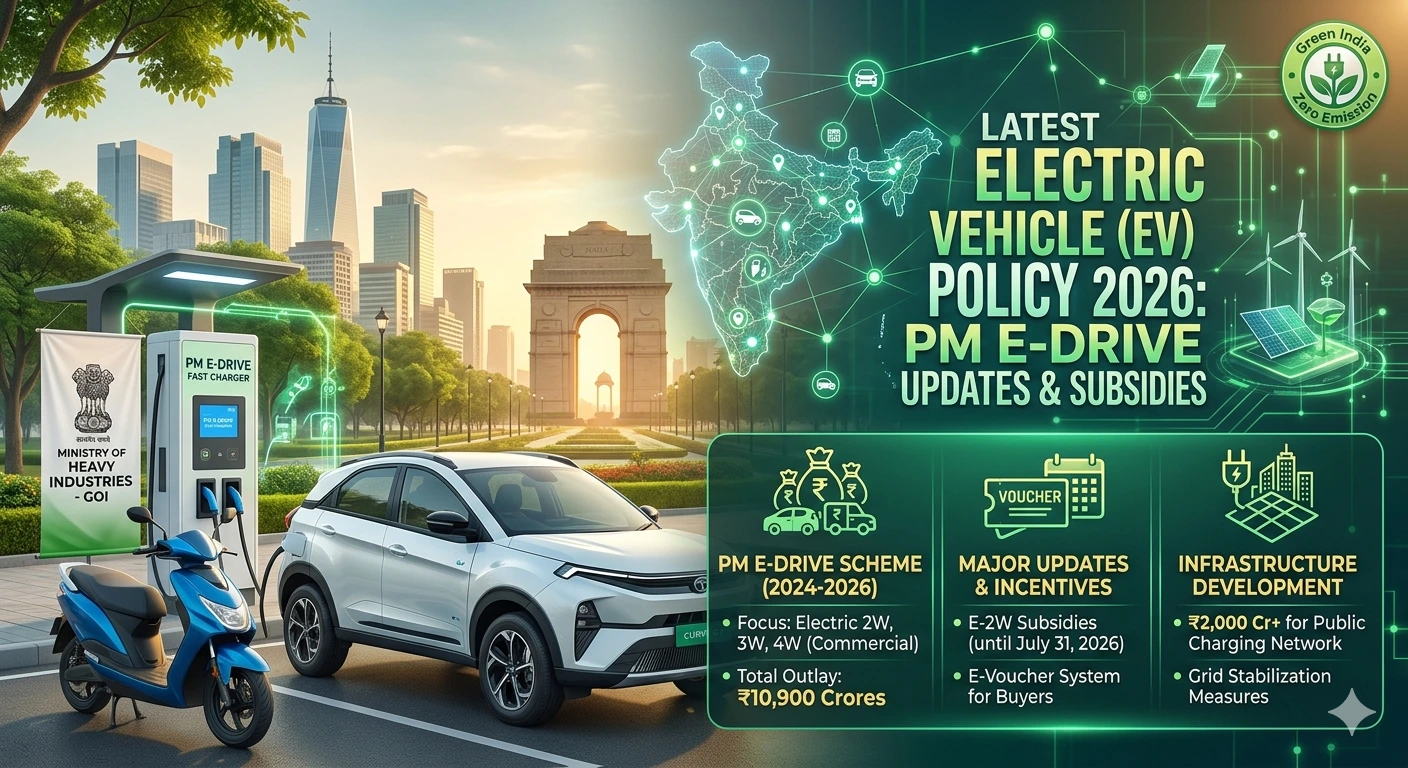
The PM Electric Drive Revolution in Innovative Vehicle Enhancement (PM E-DRIVE) is now the primary national policy, having replaced the long-standing FAME schemes.
Subsidies Extended: In a recent move, the government extended the demand subsidy for electric two-wheelers until July 31, 2026.
This gives buyers an extra four months of support beyond the initial March deadline. Revised Incentive Rates: As of April 1, 2025, the subsidy was tapered to ₹2,500 per kWh (capped at ₹5,000 per vehicle).
This is part of a strategy to move toward a self-sustaining market. Commercial Focus: Subsidies for electric three-wheelers (including e-rickshaws) are currently slated to continue until March 31, 2028, ensuring support for last-mile connectivity and commercial logistics.
Infrastructure Push: Over ₹2,000 crore has been allocated specifically for a nationwide public charging network to address "range anxiety."
2. Delhi’s EV Policy 2026–2030 (The New Benchmark)
Delhi has recently released its Draft EV Policy 2026–2030, which is one of the most aggressive regional frameworks in the country:
Tax Exemptions: Proposed 100% exemption on road tax and registration fees for electric cars priced up to ₹30 lakh until March 31, 2030.
Strict ICE Restrictions: The draft outlines phased restrictions on Internal Combustion Engine (ICE) vehicles, including a potential ban on new petrol two-wheelers and CNG autos by 2028.
Institutional Mandates: Schools are now required to convert 10% of their bus fleets to electric within two years, rising to 30% by 2030.
Targeted Incentives: High-volume segments like two-wheelers can receive up to ₹30,000 in incentives during the first year of the policy.
3. Manufacturing & R&D Incentives
The focus has shifted from just "buying" EVs to "making" them locally through the Production Linked Incentive (PLI) schemes:
PLI for Auto: Offers incentives ranging from 13% to 18% of sales value for manufacturers of advanced automotive technology.
Localisation (PMP): Manufacturers must comply with the Phased Manufacturing Programme, which mandates the use of locally produced components to qualify for government schemes.
Testing Infrastructure: Over ₹780 crore has been earmarked to upgrade testing agencies, ensuring that Indian-made EVs meet global safety and performance standards.
4. Key Highlights at a Glance
| Feature | Policy Detail (April 2026) |
| Primary National Scheme | PM E-DRIVE (Outlay: ₹10,900 Cr) |
| Two-Wheeler Subsidy | ₹2,500/kWh (Extended to July 31, 2026) |
| Three-Wheeler Subsidy | Valid until March 31, 2028 |
| Special Categories | ₹500 Cr for e-Ambulances; ₹500 Cr for e-Trucks |
| State Leadership | Delhi (Draft 2026-30) proposing 100% road tax waiver |
Official Resource Links
For the latest notifications, subsidy tracking, and draft documents, please refer to the following official government portals:
PM E-DRIVE Official Portal:
pmedrive.heavyindustries.gov.in Use this to track e-Voucher status and view national scheme guidelines.
Ministry of Heavy Industries (MHI):
heavyindustries.gov.in Access official Gazette notifications and PLI scheme details.
Switch Delhi (Delhi EV Cell):
ev.delhi.gov.in Find the latest updates on the Delhi EV Policy 2026–2030 and single-window charging installation.